
Mercedes-Benz Parking Brake: A Comprehensive Guide (See Owner’s Manual)
Mercedes-Benz owners can find detailed parking brake information within their vehicle’s owner’s manual, available as a PDF download. Understanding your specific system – manual or electronic – is crucial for safe operation and maintenance, as outlined in the official documentation.

Understanding Your Mercedes-Benz Parking Brake System
Mercedes-Benz parking brake systems are vital for vehicle security, preventing unwanted rolling, especially on inclines. Your owner’s manual is the primary resource for understanding the specifics of your vehicle’s system – whether it’s a traditional manual setup or a modern electronic parking brake. These systems utilize cables, actuators, and control modules. Familiarize yourself with warning lights, proper application techniques, and regular inspection procedures detailed within the PDF manual to ensure optimal functionality and safety. Ignoring these guidelines could compromise vehicle control.
Types of Parking Brake Systems in Mercedes-Benz Vehicles
Mercedes-Benz vehicles employ two primary parking brake systems: manual and electronic. Manual systems utilize a pedal or lever connected to rear brake calipers via cables. Electronic parking brakes, increasingly common, activate via a switch, employing an electric actuator. Your owner’s manual details which system your model features. Understanding the differences – operation, maintenance, and troubleshooting – is crucial. Refer to the PDF version for diagrams and specific instructions related to your Mercedes-Benz, ensuring correct usage and safety.
Manual Parking Brake Operation
Manual Mercedes-Benz parking brakes typically involve a pedal or lever. Depress the pedal firmly, or pull up on the lever, until you feel resistance – do not force it. This engages the rear brakes mechanically via cables. Always ensure the vehicle is on a level surface. Consult your owner’s manual for the precise location and operation specific to your model. Releasing requires depressing the pedal or lever again, often with a button press, as detailed in the PDF guide.
Electronic Parking Brake Operation
Mercedes-Benz vehicles equipped with an electronic parking brake utilize a switch, often labeled with a “P” inside a circle. Activate the system by pressing this switch; a warning light illuminates on the dashboard. Deactivation is achieved with another press of the switch. The owner’s manual, accessible as a PDF, details specific procedures, including automatic release upon shifting into drive or reverse. Refer to your manual for model-specific instructions and safety precautions regarding this system.
Locating Your Mercedes-Benz Owner’s Manual
Accessing your Mercedes-Benz owner’s manual is straightforward. Mercedes provides online versions, often as a downloadable PDF, for various models like the CLA, C-Class, and E-Class estates. Alternatively, a physical copy resides within your vehicle. The manual contains vital information regarding the parking brake system, including operation, troubleshooting, and safety guidelines. Always consult your specific model’s manual for accurate details and diagrams, ensuring proper understanding and vehicle care.
Digital Owner’s Manual Access (PDF Download)
Mercedes-Benz offers convenient digital access to owner’s manuals via PDF download. These online versions provide comprehensive information, including detailed sections on the parking brake – both manual and electronic systems. Keep in mind that vehicle variations may exist, as Mercedes-Benz continually updates its models. Downloading the latest PDF ensures you have the most current guidance for your specific vehicle’s parking brake operation and maintenance procedures.
Physical Owner’s Manual Location
Your Mercedes-Benz’s physical owner’s manual, containing vital parking brake information, is typically located within the glove compartment. This comprehensive guide details both manual and electronic parking brake systems, offering step-by-step instructions and safety precautions. Refer to your vehicle’s specific documentation for precise placement, as locations can vary slightly between models. The manual provides essential insights for proper operation and troubleshooting of your parking brake.
Common Issues with Mercedes-Benz Parking Brakes
Mercedes-Benz parking brake systems can experience various issues. Manual systems may become stuck or require cable adjustments. Electronic systems can present malfunctions, often indicated by dashboard warning lights. Cable issues, including corrosion or breakage, are also common. Always consult your owner’s manual for specific troubleshooting steps and safety guidelines related to your vehicle’s parking brake system. Professional diagnosis is recommended for complex problems.
Stuck Parking Brake – Manual Systems
A stuck manual parking brake in your Mercedes-Benz often requires immediate attention. Begin by firmly pressing the pedal while simultaneously attempting to release it. Inspect the parking brake cables for any visible obstructions or corrosion. Refer to your owner’s manual for specific cable routing and adjustment procedures. If the pedal remains stuck, professional assistance is strongly advised to prevent further damage or safety hazards.
Electronic Parking Brake Malfunctions
Mercedes-Benz vehicles equipped with an electronic parking brake may display warning lights on the dashboard if a malfunction occurs. Consult your owner’s manual to decipher the specific error message. Attempting to activate or deactivate the system, and checking the switch functionality are initial troubleshooting steps. If issues persist, a diagnostic scan by a qualified technician is recommended to identify and resolve the underlying problem, ensuring continued safety.
Parking Brake Cable Issues & Adjustments
Mercedes-Benz vehicles with manual parking brake systems utilize cables that can stretch or become misaligned over time. The owner’s manual details inspection procedures and adjustment methods. Issues like sticking or insufficient engagement may require cable replacement or re-routing. Proper cable function is vital for secure vehicle immobilization; consult diagrams within the manual for correct routing and attachment points before attempting any adjustments or repairs.
Troubleshooting a Stuck Manual Parking Brake
If your Mercedes-Benz’s manual parking brake becomes stuck, the owner’s manual advises initial attempts to firmly depress the pedal while simultaneously applying slight forward or reverse motion. Inspect cables for binding or corrosion, referencing the manual’s illustrations. If unsuccessful, professional assistance is recommended to avoid damage. Never force the pedal, as this could compromise the system. Detailed troubleshooting steps and safety precautions are outlined within the vehicle’s documentation.
Releasing a Frozen Manual Parking Brake Pedal
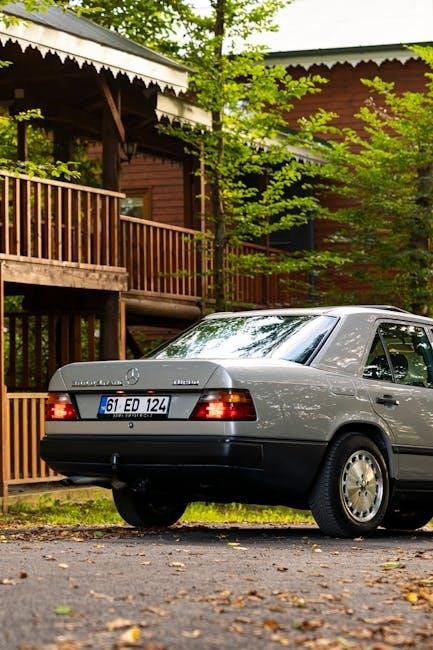
The Mercedes-Benz owner’s manual suggests gently but firmly applying pressure to the manual parking brake pedal, while having an assistant attempt to roll the vehicle slightly forward or backward. Penetrating oil, carefully applied to cable linkages (as shown in diagrams within the manual), may help. Avoid excessive force; if the pedal remains frozen, consult a qualified technician to prevent damage to the system and ensure safe operation.
Inspecting and Adjusting Parking Brake Cables
The Mercedes-Benz owner’s manual details how to inspect parking brake cables for fraying, corrosion, or damage. Adjustments, often involving the handbrake lever mechanism (refer to manual diagrams), ensure proper tension. Loose cables reduce braking effectiveness, while overly tight ones can cause dragging. Regular inspection and adjustment, as per the manual’s guidelines, are vital for maintaining optimal parking brake performance and vehicle safety.
Diagnosing Electronic Parking Brake Problems
The Mercedes-Benz owner’s manual emphasizes checking the dashboard for error messages related to the electronic parking brake. Testing the switch’s functionality is also crucial; it should engage and disengage smoothly. If issues persist, the manual advises consulting a qualified technician for diagnostics, as electronic systems require specialized tools. Ignoring warning signs can compromise safety, so prompt attention is essential, guided by the manual’s recommendations.
Checking for Error Messages on the Dashboard
The Mercedes-Benz owner’s manual stresses the importance of routinely monitoring the dashboard for parking brake-related warnings. A yellow indicator typically signals a system malfunction requiring inspection. A red warning demands immediate attention, potentially indicating a critical failure. The manual details specific message meanings, guiding owners to understand the issue’s severity and whether immediate professional assistance is needed for safe operation and repair.
Testing the Electronic Parking Brake Switch
Your Mercedes-Benz owner’s manual recommends verifying the functionality of the electronic parking brake switch during vehicle checks. Ensure the switch engages and disengages smoothly, observing the dashboard indicator confirming activation. The manual details proper switch operation, including any specific sequences or hold times. If the switch feels unresponsive or the indicator doesn’t align with the action, consult a qualified technician for diagnosis and repair.
Mercedes-Benz Models with Specific Parking Brake Systems
The Mercedes-Benz owner’s manual highlights variations in parking brake systems across different models. For example, the CLA Shooting Brake, C-Class Estate, and E-Class Estate may feature distinct electronic systems. Newer models like the EQA, EQB, and EQE SUV also have specific implementations. Always refer to the manual section dedicated to your vehicle to understand its unique parking brake operation and maintenance requirements for optimal performance.
CLA Shooting Brake Parking Brake Systems
The Mercedes-Benz CLA Shooting Brake owner’s manual details its electronic parking brake functionality. It emphasizes proper activation procedures, including ensuring the vehicle is stationary before engaging. The manual also covers potential warning lights and troubleshooting steps. Specific diagrams illustrate cable routing and actuator locations. Referencing the PDF version provides comprehensive guidance on maintaining the CLA’s parking brake system, ensuring safe and reliable operation as designed by Mercedes-Benz.
C-Class Estate Parking Brake Systems
The Mercedes-Benz C-Class Estate’s parking brake system is thoroughly explained in the official owner’s manual. It details both operation and maintenance, often featuring an electronic parking brake. Users can find specific instructions on releasing the brake, interpreting warning indicators, and accessing PDF versions of the manual online. Diagrams illustrate component locations. Proper understanding, as outlined in the manual, is vital for safe vehicle operation and preventing rollaway scenarios.
E-Class Estate Parking Brake Systems
Mercedes-Benz E-Class Estate models typically utilize an electronic parking brake, comprehensively covered within the owner’s manual. The manual provides detailed guidance on activation, deactivation, and troubleshooting potential malfunctions. Owners can access the manual online as a PDF, finding diagrams illustrating system components and warning light interpretations. Referencing the official documentation ensures correct operation and addresses specific features of the E-Class Estate’s parking brake system for optimal safety.
EQA, EQB, and EQE SUV Parking Brake Systems
The Mercedes-Benz EQA, EQB, and EQE SUV models predominantly feature electronic parking brake systems. Detailed instructions regarding operation, including emergency release procedures, are thoroughly documented in the vehicle’s owner’s manual; Owners can conveniently download the manual as a PDF for easy access. The manual clarifies warning light meanings and provides essential information for maintaining the system’s functionality, ensuring safe and reliable operation of these electric SUVs’ parking brake features.

The Role of the Parking Brake in Vehicle Safety
Your Mercedes-Benz’s parking brake is a vital safety component, preventing unintended vehicle movement. The owner’s manual emphasizes its use on any incline, even slight ones, and details emergency procedures. It’s crucial for preventing rollaway incidents. Refer to the manual for specific instructions on applying both manual and electronic systems correctly. Understanding its function, as outlined in the PDF version, contributes significantly to overall vehicle safety and responsible driving practices.
Emergency Situations and Parking Brake Use
The Mercedes-Benz owner’s manual details critical parking brake procedures for emergency scenarios. In situations where the primary braking system is compromised, the parking brake can provide supplemental stopping power. Familiarize yourself with its operation – manual or electronic – before an emergency arises. The PDF manual stresses controlled application; avoid abrupt engagement. Knowing these steps, as outlined in the documentation, can be crucial for maintaining vehicle control and ensuring passenger safety.
Preventing Vehicle Rollaway
Your Mercedes-Benz owner’s manual emphasizes the parking brake’s vital role in preventing unintended vehicle movement, or rollaway. Always engage the parking brake fully, especially when parked on inclines. The manual details proper engagement for both manual and electronic systems. Refer to the PDF version for diagrams. Consistent use, as described in the documentation, safeguards against accidental vehicle release, protecting people and property. Never rely solely on the transmission’s park position; always use the brake!
Maintenance and Care of Your Parking Brake
The Mercedes-Benz owner’s manual stresses regular inspection of parking brake components for optimal function. For manual systems, the PDF guide details lubrication of moving parts to prevent seizing. Check cables for fraying or damage. Electronic systems require no such routine lubrication, but the manual advises monitoring for error messages. Proper care, as outlined, ensures reliable operation and extends the lifespan of your parking brake system, enhancing vehicle safety.
Regular Inspection of Parking Brake Components
The Mercedes-Benz owner’s manual emphasizes routinely checking parking brake cables for signs of wear, fraying, or corrosion. For manual systems, inspect the lever and linkage. Electronic systems require checking for proper actuator function. The PDF guide details visual inspection procedures. Consistent monitoring, as described, helps identify potential issues early, preventing more significant repairs and ensuring the parking brake operates effectively, contributing to overall vehicle safety.
Lubrication of Moving Parts (Manual Systems)
The Mercedes-Benz owner’s manual recommends periodic lubrication of manual parking brake components to maintain smooth operation. Specifically, cable conduits and pivot points should receive appropriate lubricant, preventing corrosion and ensuring free movement. The PDF guide details recommended lubricant types and application points. Proper lubrication, as outlined, minimizes friction, reduces wear, and helps prevent the parking brake from becoming stuck or requiring excessive force to engage or disengage.
Understanding Parking Brake Warning Lights
Your Mercedes-Benz owner’s manual explains the significance of parking brake warning lights. A yellow light typically indicates the parking brake is engaged, while a red warning signifies a system malfunction. The manual details potential causes, such as low brake fluid or sensor errors. Referencing the PDF version provides specific troubleshooting steps and emphasizes the importance of addressing red warnings promptly to ensure vehicle safety and prevent potential rollaway situations.
Yellow Parking Brake Warning Light
The Mercedes-Benz owner’s manual clarifies that a yellow parking brake warning light simply indicates the system is currently engaged. This is normal operation and doesn’t necessarily signal a problem. However, ensure the brake fully disengages when released. The manual advises checking for complete release and consulting the PDF guide if the light persists after disengagement, potentially indicating a minor system issue requiring attention for optimal safety.
Red Parking Brake Warning Light
A red parking brake warning light on your Mercedes-Benz, as detailed in the owner’s manual, signifies a more serious issue. This indicates a malfunction within the parking brake system itself. The manual strongly advises against continued driving and recommends immediate professional inspection. Referencing the PDF version provides specific troubleshooting steps, but a qualified technician is essential to diagnose and repair the underlying problem, ensuring vehicle safety.
Detailed Steps for Applying the Parking Brake
The Mercedes-Benz owner’s manual provides precise instructions for engaging the parking brake. For manual systems, firmly depress the pedal until you feel resistance; avoid excessive force. With the electronic system, consult the manual for the specific switch location and activation procedure. Always confirm the warning light illuminates, verifying proper engagement. Following these steps, detailed in the PDF, ensures secure vehicle immobilization and prevents unintended rollaway.
Applying the Manual Parking Brake Correctly
The Mercedes-Benz owner’s manual emphasizes a firm, deliberate action when using the manual parking brake. Depress the pedal fully until resistance is felt – do not “pump” it. Avoid applying excessive force, which can strain the cable system. Refer to the manual’s diagrams for proper pedal travel. Correct application, as illustrated in the PDF, guarantees secure vehicle holding and prevents accidental release, ensuring safety.
Activating the Electronic Parking Brake
The Mercedes-Benz owner’s manual details a simple activation process for the electronic parking brake: locate the dedicated switch, typically near the gear selector. Press the switch firmly until the indicator light illuminates on the dashboard. Ensure the vehicle is completely stationary before activation. The PDF manual provides specific switch locations for various models. Confirm full engagement before exiting the vehicle, as detailed in the owner’s guide.
Parking Brake Components and Their Functions
The Mercedes-Benz owner’s manual illustrates key components like parking brake cables (in manual systems) and their routing, alongside the electronic parking brake actuator and control module. Cables transmit force to the rear wheels, while the electronic system utilizes an actuator. Diagrams within the PDF manual clarify component locations. Understanding these parts, as described in the guide, aids in recognizing potential issues and proper maintenance procedures.

Parking Brake Cables and Their Routing
The Mercedes-Benz owner’s manual details how manual parking brake cables are routed from the lever to the rear wheels. Diagrams showcase guides securing the cables at frame cross members. Proper routing is vital for efficient operation; the manual emphasizes checking for kinks or obstructions. Disconnecting the front cable from the hand brake lever is a step outlined for certain repairs, as illustrated within the PDF documentation.

Electronic Parking Brake Actuator and Control Module
The Mercedes-Benz owner’s manual explains the electronic parking brake relies on an actuator and control module. These components, detailed in diagrams within the PDF, manage brake application and release. The manual highlights potential error messages related to this system appearing on the dashboard. Software updates, occasionally released by Mercedes-Benz, can affect the electronic parking brake’s functionality, and information regarding these is often found within the manual’s updates section.
Repairing or Replacing Parking Brake Components
The Mercedes-Benz owner’s manual advises seeking professional assistance for most parking brake repairs, especially those involving the electronic system or cable routing. It details potential repair costs, which vary based on the model and issue. The manual stresses disconnecting the battery before any work. Diagrams illustrate component locations. For significant repairs or replacements, the manual recommends consulting a qualified Mercedes-Benz technician to ensure proper functionality and safety.
When to Seek Professional Assistance
The Mercedes-Benz owner’s manual strongly recommends professional help for complex parking brake issues. This includes electronic malfunctions, cable replacements, or any situation beyond basic inspection. Attempting advanced repairs without proper knowledge can compromise safety. The manual highlights the need for specialized tools and diagnostic equipment. If error messages appear, or if the brake feels unresponsive, immediately consult a qualified Mercedes-Benz technician for diagnosis and repair.
Cost of Parking Brake Repairs
The Mercedes-Benz owner’s manual doesn’t detail repair costs, as these vary significantly. Simple adjustments to manual cables might be relatively inexpensive, while electronic parking brake actuator replacements are considerably pricier. Expect to pay for diagnostic fees, parts, and labor. Costs depend on the model, the extent of the damage, and the service center’s rates. Obtaining a quote from a certified Mercedes-Benz technician is crucial before authorizing any repairs to avoid unexpected expenses.

Accessing Specific Parking Brake Information in the Owner’s Manual
Your Mercedes-Benz owner’s manual provides detailed diagrams and illustrations relating to the parking brake system. Locate the section dedicated to vehicle features, often including subsections on operation and maintenance. The PDF version allows for keyword searches – use terms like “parking brake,” “electric parking brake,” or “manual brake.” Refer to the index for precise page numbers, ensuring you understand the specifics for your vehicle model and year.
Locating the Parking Brake Section in the Manual
Within your Mercedes-Benz owner’s manual, the parking brake section is typically found under “Vehicle Features” or “Operation.” Look for subsections detailing both manual and electronic systems, if applicable to your model. The index is invaluable; search for “parking brake” to pinpoint the exact pages. PDF versions facilitate easy searching, while physical manuals often have a clear table of contents guiding you to the relevant information for safe and correct usage.

Understanding Diagrams and Illustrations
The Mercedes-Benz owner’s manual utilizes diagrams and illustrations to clarify parking brake system components and operation. These visuals depict cable routing (for manual systems), actuator locations (electronic brakes), and the parking brake switch. Pay close attention to these, as they visually demonstrate how the system functions. Refer to these illustrations alongside the textual descriptions for a comprehensive understanding, especially when troubleshooting or performing basic inspections, as outlined in the PDF or printed manual.
Mercedes-Benz Parking Brake System Updates and Recalls
Mercedes-Benz continuously updates vehicle systems, including the parking brake. Regularly check for software updates for electronic parking brake systems, often detailed in the owner’s manual or through the Mercedes me connect portal. Crucially, verify if any recalls relate to your vehicle’s parking brake. The owner’s manual directs you to official Mercedes-Benz recall websites for the latest information, ensuring your system operates safely and efficiently, as per manufacturer specifications.
Checking for Recalls Related to the Parking Brake
Your Mercedes-Benz owner’s manual provides links to official recall websites where you can input your Vehicle Identification Number (VIN) to check for any outstanding recalls. These recalls may specifically address the parking brake system, covering potential malfunctions or safety concerns. Regularly monitoring these resources is vital for ensuring your vehicle meets Mercedes-Benz safety standards and that any necessary repairs are performed promptly, as detailed within the manual’s guidance.
Software Updates for Electronic Parking Brake Systems
The Mercedes-Benz owner’s manual emphasizes the importance of software updates for vehicles equipped with electronic parking brake systems. These updates, often delivered during scheduled service appointments, can enhance system performance, address potential glitches, and improve overall reliability. Checking with your authorized Mercedes-Benz dealer regarding available updates is crucial, as outlined in the manual, to maintain optimal functionality and safety of your electronic parking brake.
Safety Precautions When Working with the Parking Brake
The Mercedes-Benz owner’s manual strongly advises disconnecting the vehicle’s battery before undertaking any repairs involving the parking brake system. Furthermore, it’s critical to ensure the vehicle is properly lifted and securely supported using jack stands. These precautions minimize the risk of accidental engagement or electrical shorts during maintenance. Always consult the manual for specific lifting points and safety guidelines before commencing any work on your Mercedes-Benz’s parking brake.
Disconnecting the Battery Before Repairs

The Mercedes-Benz owner’s manual emphasizes disconnecting the battery’s negative terminal before any parking brake work. This crucial step prevents accidental activation of the electronic parking brake or electrical system damage during repairs. Ensure the vehicle is completely switched off, and follow the manual’s instructions for safe battery disconnection. Reconnecting requires careful adherence to the correct polarity, as detailed within your vehicle’s specific owner’s manual.
Proper Lifting and Support of the Vehicle
The Mercedes-Benz owner’s manual stresses the importance of safely lifting and supporting the vehicle when servicing the parking brake. Utilize designated jacking points, as illustrated in the manual, to avoid damage. Always employ sturdy jack stands to securely support the vehicle’s weight before working underneath. Never rely solely on the jack. Consult the manual for specific lifting procedures relevant to your Mercedes-Benz model, ensuring a stable and secure working environment.